
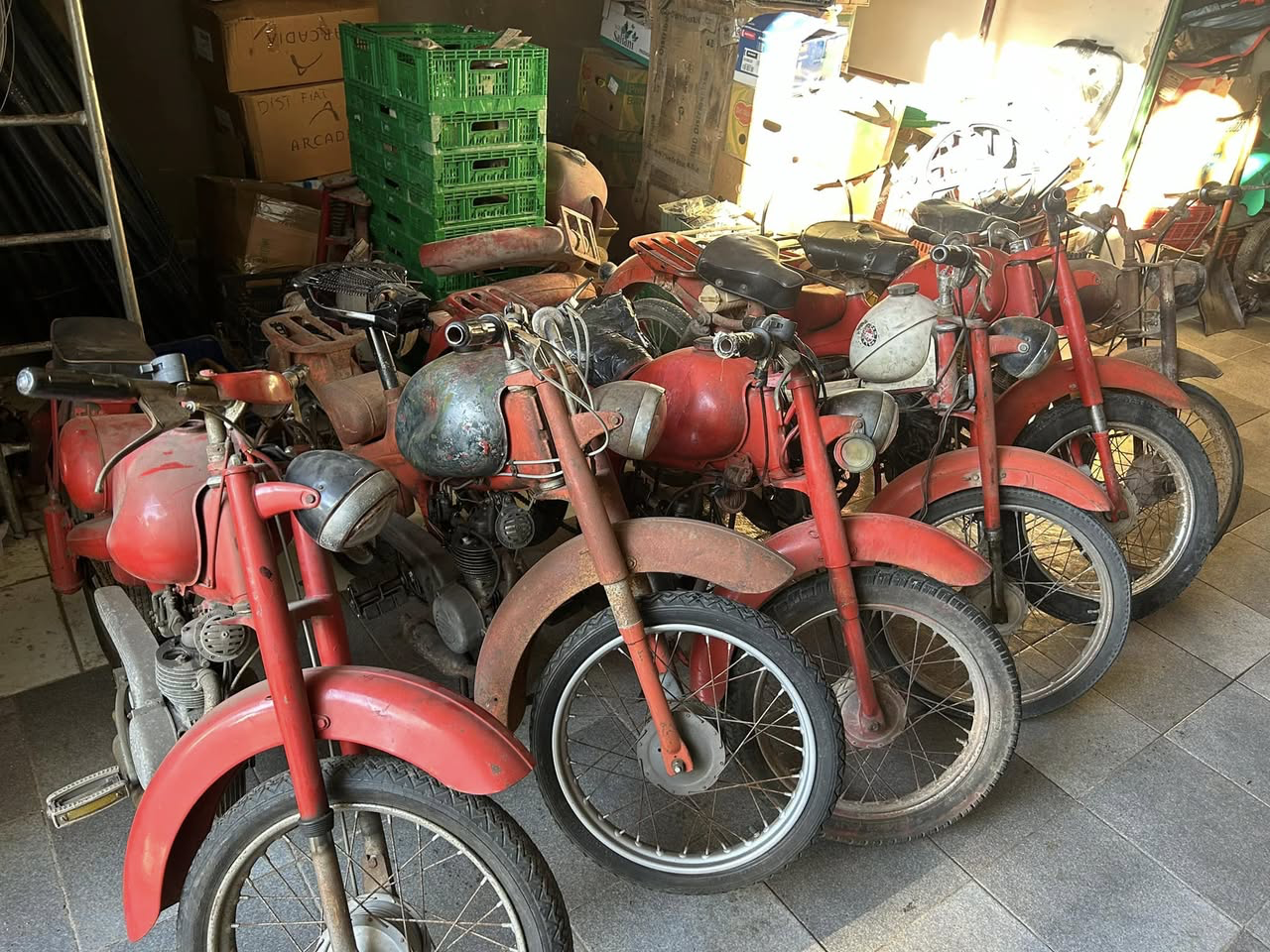
First of all: forget the prices you find online
If you're looking for the Motom 2026 model, you've come to the right place.
Trade magazines and newspaper articles cite prices taken from the Rossomotom.it website. The last update dates back to 2008. They are wrong—by nearly twenty years. . Those figures reflect a market that no longer exists, and anyone who uses them as a reference for sales finds their listing sitting idle for months, if not years.
That said, Rossomotom.it remains an important historical landmark—it was the first website dedicated to the Motom in Italy that didn’t just cover the models but has always shared manuals as well. For many of us, including the author, it was the first “online” destination when we first entered this world.
Below is the current, up-to-date market value of the Motom 2026 in Italy

The current market situation: it's dire
Let's be honest: hardly anyone wants the Motom these days.
The reason is simple: there’s no new generation coming in. Motom collectors belong to a specific age group, and most of them already own the models they were looking for. Young people don’t even know what a Motom is. The result is a market with a flood of listings and very little actual demand.
A listing isn't a market value. If you see a Motom C listed for 1,000 euros on Subito, that doesn't mean it's worth 1,000 euros. It means the seller wants 1,000 euros. When someone actually buys it at that price, then we can say it’s worth €1,000. Until then, it’s just a number on a screen.
Motom 2026 Prices and Values
We don’t distinguish between “preserved” and “restored,” and there’s a specific reason for that: at these prices, the cost of restoration is never recouped through the sale. A well-done restoration costs more than it would add to the market value.
What’s more, you need to understand how it was restored. A coat of paint in the wrong color, the wrong pedals, a non-original headlight, anachronistic details—all of this lowers the value. Buyers don’t always notice this—there’s always some inexperienced buyer dazzled by the shiny paint, willing to pay more than they should—but the serious collector spots it right away.
4-stroke motorcycles
Motom C and GG
The most common model on the market. €200–€600, depending on its overall condition.
Super Sport and Junior Motorcycles
More in demand, but the market remains challenging. 500–900 euros.
Motom D (Women's)
Produced in very limited numbers, with a one-of-a-kind frame designed specifically for women, it features the same 4-stroke engine as other Motom models but with reduced power. A rare find, both historically and in practice.
Yet it’s worth very little: 300–600 euros.
No one has ever liked it, and the market makes that abundantly clear. It is perhaps the most striking example of how, in the world of motorcycles, rarity does not justify the price. A rare item that no one likes is still an item that won’t sell.
Motom 12A and 12C
Their prices are higher than those of other common models: they can exceed 1,000 euros. These are the models that still attract some interest among the most passionate collectors.
Motom 12D and 12E — the "stick-type" models
These are the most common models in the entire Series 12. Commonly referred to as "stick-type" (link to the dedicated article), they are also the ones where you can find just about anything: misprinted parts, components mixed between different models, makeshift paint jobs, and specimens reduced to scrap.
The problem is their unmistakable 1950s vibe, which fools many inexperienced buyers. The look works, and the price goes up—even when it shouldn't.
Read the article: "Motom on a Stick"? It's not the first series—let's debunk the myth
The price range is quite wide: 300–700 euros. But be careful: a 12D or 12E for 700 euros has to be in really good condition. One for 300 could be a bargain or a disaster—and telling the difference takes a trained eye.
Motocross (4-stroke)

Not to be confused with the Motom 121, which is a 2-stroke motocross bike. This is the green, 4-stroke model, which is also rare—and here, unlike with the Motom D, its rarity really works in its favor, because people like it.
Prices start at 800 euros and can go as high as 1,800 euros. It is one of the few cases where demand and rarity truly come together.
Motom Delfino
The decline here has been staggering. Just a few years ago, they were selling for 6,000 euros. Today, they remain unsold even at 3,000. The market has simply turned its back on them.
Motomic and Motom 98: the extremely rare models
There are virtually no listings for these models. The few that do appear start at 4,000 euros and can go as high as 7,000.
What do these numbers mean? Very little, in market terms. There isn't enough demand to establish a real price. People who buy them do so on a whim, certainly not as an investment.
And when we're talking about 4,000–7,000 euros for a whim… it's just crazy. You might be the lucky owner of an extremely rare item, or the unlucky buyer of something you'll never be able to resell for that price.
2-stroke motorcycles: they're worth even less
Few people know this, but Motom also produced 2-stroke models. And on the current market, they’re worth even less than the 4-stroke models.
Motom Daina
The bottom of the market: 50–300 euros. It’s hard to go much lower in the world of Italian automotive collecting.
Motom Nova Scrambler
An added bonus thanks to its styling, which appeals even to those who aren’t Motom purists: €300–€700.
Motom 121
The most sought-after of the two-stroke models. Prices start at 700 euros and up—but the real problem isn't the price; it's finding one. Listings are extremely rare, and when they do appear, they disappear quickly.
The market no longer makes sense—and the numbers prove it
I'll be blunt: price lists won't make sense for Motoms in 2026.
I bought a Motom C in person for 200 euros, a Junior for 350 euros, and a Delfino for 2,900 euros. I also spent 2,000 euros on a tuned Motom. How do you put these numbers into a table? You can’t.
The price almost always depends on a single factor: how eager the seller is to sell. (or the buyer)
Here’s a concrete example: a friend of mine was looking for a Motom Junior. At the time, he found one for 700 euros—in need of restoration, with some parts missing or incorrect. He bought it because he wanted it right away. Two or three months later, with a little patience, he would have found a Junior in excellent condition for the same price. Rushing into collecting is always the surest way to waste money.
Supporting documents: are they really worth more?
Yes, but much less than you might think.
The original registration document is only really useful for those who want to register and use a Motom on the road. And that brings us to the real question: how many people want to use a Motom these days?
For the serious collector, the owner’s manual is a nice historical artifact to keep in a drawer. It’s unlikely to add hundreds of euros to the price. Sellers who tout the owner’s manual as if it were a guarantee of value are, in most cases, simply trying to justify an inflated asking price.
A word about replacement parts
We’ll be publishing a dedicated article (link to follow), but it’s worth mentioning one key point right away: Motom parts are expensive.
One example stands out: replacing the short seat with the correct one from a Super Sport starts at 200 euros, including the frame and cover. And this isn’t an isolated case: rebuilding an engine—bearings, gaskets, and O-rings—easily costs €200, not counting the cylinder head assembly and labor; if the connecting rod is broken… €150 for a connecting rod if you can find one, plus the machining.
The practical conclusion is simple: it’s always better to spend a little extra on a motorcycle that’s already fully equipped and in good condition than to buy a cheaper one that needs work. The initial savings disappear the moment you have to look for your first replacement part.
If you want to sell: take note
Your motorcycle is almost certainly worth less than what your grandfather or father paid for it, in real terms. That’s a fact, not an opinion.
If you’ve spent money restoring it, we get that—but no one is going to spend €2,500 on a Motom C when there are dozens of listings on the market for less than half that price, with models that are only slightly worse than yours. The market doesn’t reward your investment; it only rewards what the buyer is willing to pay. And right now, they aren’t willing to pay much.
The best advice I can give: keep it. Cherish the memory, keep it in the garage, and take it out every now and then. An item with a history like that can’t be measured in euros.
If, on the other hand, you want something that holds its value, go for a Vespa: a solid market, a huge community, and prices that hold up. Motorcycles today are something else entirely—they’re pure passion, not an investment.
If you want to buy: now is the time
For those looking to get into the world of motorcycles, 2026 is, paradoxically, the best time in decades. Prices are low, there are plenty of listings, and with a little patience, you can find interesting models at affordable prices.
The best deals can be found on Facebook and Subito.it. Online sellers often just want to get rid of their motorcycles, know the real market value, and are willing to negotiate. With patience and a keen eye, you can score a great deal.
You can find the Facebook marketplace we run here: Motorcycle Parts — where to find them (and where to sell them)
The worst deals? At in-person markets. In Novegro, for example, prices automatically go up. You’re paying for the thrill of the moment, not the motorcycle.
An important note regarding these prices
The prices listed in this article aren’t based on magazines, tables, or algorithms. They’re the result of three years of hands-on experience in the field: actual purchases, extremely difficult sales, and trades—the kind that are practically impossible, because collectors already have everything.
No theoretical data. Just an insider’s view of the market—specifically the market in northern Italy, particularly Lombardy (my region), Piedmont, and Veneto.
Buying a Motom in Southern Italy
Anyone looking to buy a motorcycle in southern Italy faces a paradox: prices are on average 30–40% higher than in the north, even for the same model and condition.
The reason is unclear. Historically, the South was an important market—one of Italy’s largest Motom dealerships was based in Bari, and there was an equally significant dealership in Sicily. Yet today, there are few models on the road, listings are rare, and sellers are aware of this and ask for a higher price.
The bottom line is simple: if you live in the south and want a motorcycle at a realistic market price, you need to look in the north. Most listings come from Lombardy, Veneto, Piedmont, and Emilia. There, prices reflect the actual market, availability is higher, and you can find just about anything.
If you have a clear idea of which model you want, be prepared for the possibility that you might have to travel. It’s not always the most cost-effective option—it depends on the model, the price, and how far you’re willing to go—but it’s often the only way to find what you’re looking for at a reasonable price.
Buying a Motom from abroad
If you're reading this guide from abroad, the situation is different for you than it is for an Italian buyer.
The Motom market is almost exclusively Italian—listings are on Subito.it and Facebook Italia, sellers speak Italian, and negotiations take place in Italian. This puts you at a disadvantage right from the start.
The main issue isn't the price—it's the speed. A good Motom at a fair price sells out in a matter of days, sometimes even hours. If you're in Italy, you can go see it the same day, negotiate in person, and take it home. You can't.
On top of that, there’s shipping: packing a classic motorcycle safely is expensive, and finding a reliable carrier takes time and expertise. The risk of damage during transport is real, and if a seller has to choose—at the same price—between selling to an Italian buyer with a van or to a foreign buyer who has it shipped via courier and may even have to handle the packing themselves… they prefer an Italian buyer: fewer problems and an immediate sale.
A practical tip: if you want a Motom and you're abroad, consider asking someone you trust in Italy to inspect the bike for you, negotiate the price, and handle the shipping. Or plan a trip to Italy—flea markets like Novegro are more convenient for buying, but as mentioned earlier, prices are higher than those in online listings.
The prices listed are estimates based on direct observation of the current market in 2026. They are not official quotes, partly because only the market can make them official!
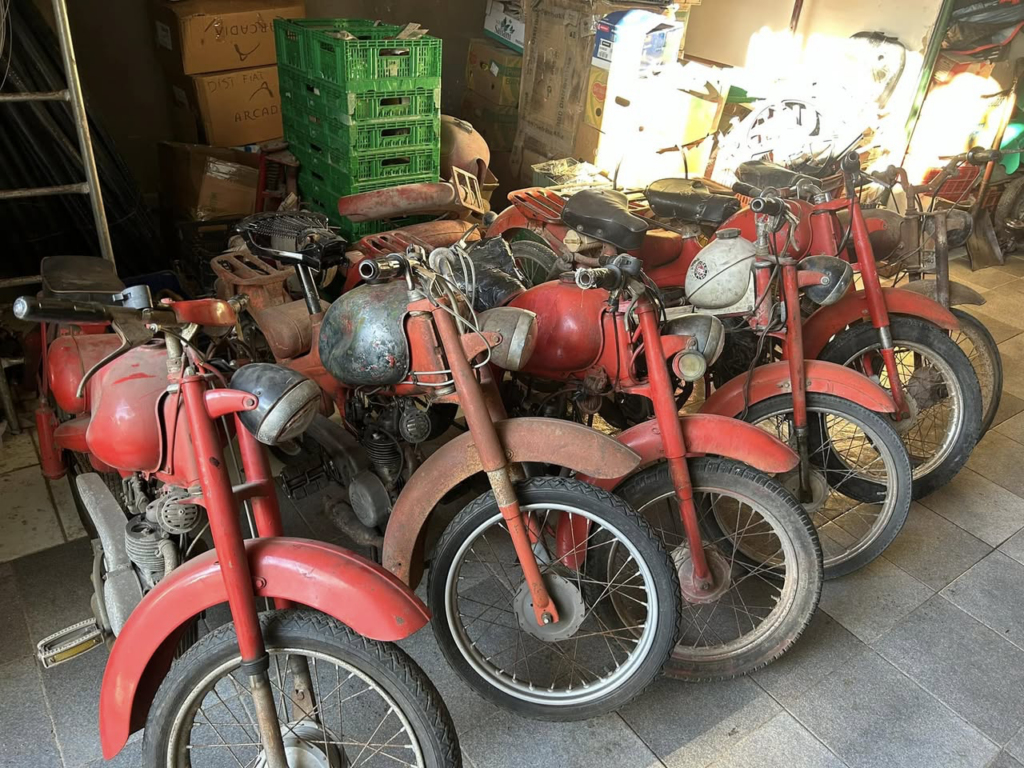
If you found this article useful and would like to help keep Motom Club alive, you can support the project with a small contribution.
SUPPORT MOTOM CLUBAll content on this site is protected by copyright. Reproduction, even partial, is prohibited without written permission.